
Guide · 6 min read · Updated September 2026
Ceramic coating vs. wax for boats: what lasts in Florida sun
In South Florida, ceramic coating outlasts wax several times over, ten to one or more on a well-kept boat. Carnauba wax survives two to three months under a summer UV index of 9–11+; a professional marine ceramic coating typically holds 18–24 months, and two to five years with fresh-water washdowns and annual maintenance. Up front it costs more; per year it usually costs less than three or four wax visits.
By Ivan Zea, owner of Zea Detailing, West Palm Beach
Key takeaways
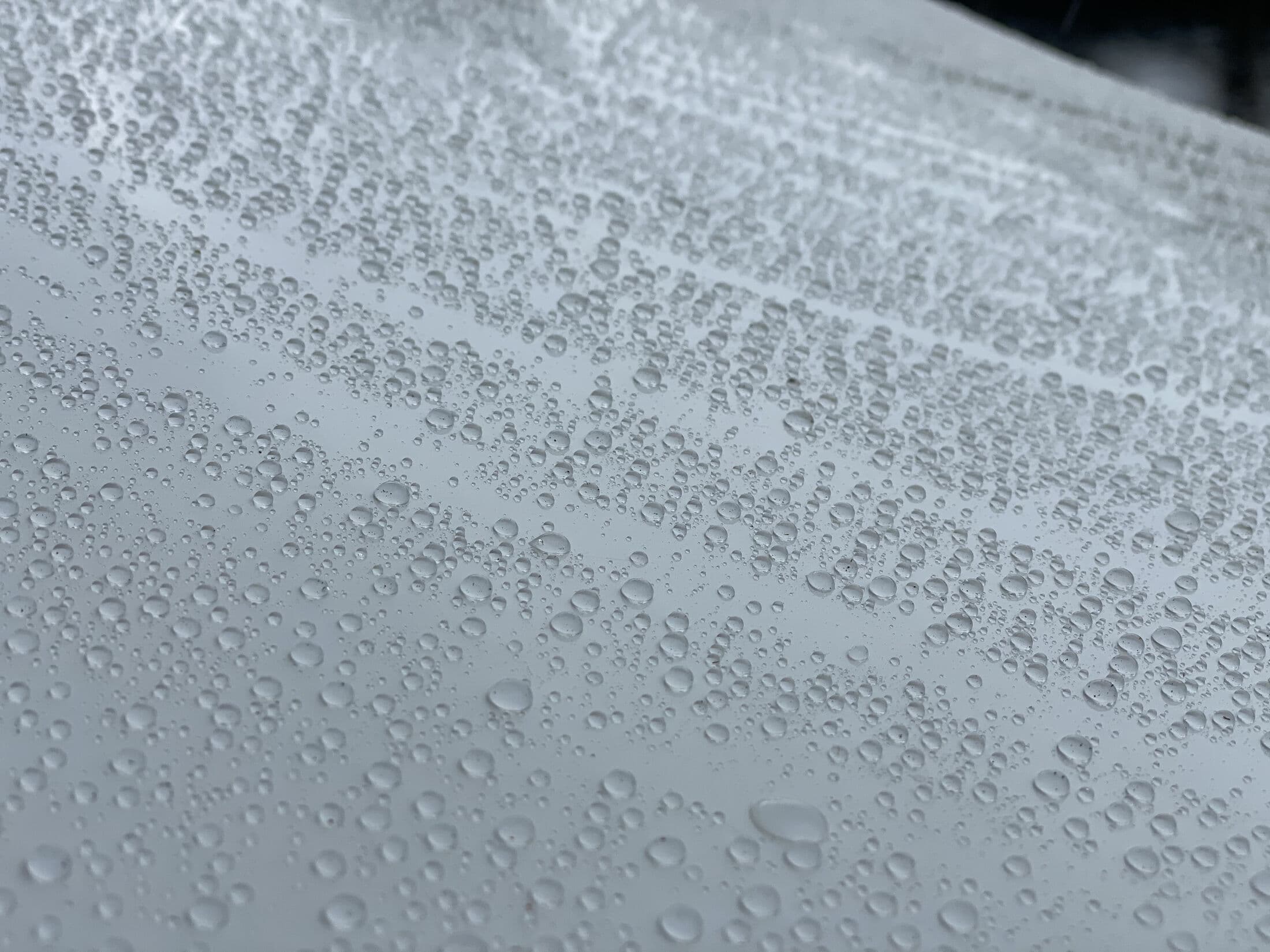
- Wax lasts two to three months in Florida sun; marine ceramic typically 18–24 months, up to five years with maintenance.
- Summer UV index here runs 9–11+ and has hit 12; unprotected gelcoat starts chalking within a season.
- A coating needs full decontamination and correction first; prep is most of the cost and all of the result.
- Coated boats still get washed. Fresh-water rinses and pH-neutral soap are what reach the long end of coating life.
- Per year, a coating amortized over two to five years usually costs the same or less than three wax visits.
- Tannin waterline stain from the Loxahatchee and Intracoastal releases with a mitt on a coated hull, not an acid wash.
Why wax fails so fast on this coast
Wax is a sacrificial film. It sits on top of the gelcoat, absorbs UV, and washes away. In a temperate climate that takes a season. Here it takes weeks. Florida's summer UV index runs 9 to 11+ from June through August, peaks in July, and has been recorded as high as 12, well inside the EPA's 'Extreme' band (11+). A carnauba wax rated for two to three months in moderate conditions lasts less in tropical sun, and the general gelcoat guides that recommend re-waxing every two months for full-sun saltwater boats are describing exactly the Intracoastal from Jupiter down to Lighthouse Point.
Heat finishes what UV starts. Carnauba softens around 180°F, and a dark hull side facing west across the Lake Worth Lagoon in August gets there. Salt crystals sit in the softened film, the afternoon storm rinses half of it off, and by the next weekend the water isn't beading anymore. We see this on boats that were waxed in May and chalky at the waterline by Labor Day. Unprotected gelcoat then goes through photochemical oxidation: the resin chains break down, the surface turns chalky, and gloss goes flat.
How long does ceramic actually last on gelcoat here?
Longer, but not forever. Our own number, after ten years on this coast, is two to five years, and the published range sits inside it: a Stuart installer publishes 18 to 24 months of effective protection with an annual maintenance visit, marine guides put professional coatings at one to three years, and Miami-market guides say two to five. Where a boat lands in that window comes down to three things. How it was prepped. Where it lives. How often it sees fresh water.
A dry-stacked center console in Jupiter or a lift-kept boat behind a house in Lighthouse Point sits at the top of the range. A sportfish that lives in the water at a marina on the Intracoastal, runs the inlet every weekend, and gets rinsed when someone remembers sits at the bottom. The coating is the same; what changes is how much of the environment reaches the gelcoat. Below the waterline, coating longevity drops, and installers say so plainly; one Ceramic Pro Marine installer publishes the manufacturer's guarantee as three years above the waterline and one below.
What does each one cost per year?
We quote every boat individually, so these are market figures from public price pages, not ours. A South Florida cost guide lists $8 to $15 per foot for a basic wash and wax, and Fort Lauderdale wash-and-wax services start around $499 for a small boat in good condition. A Central Florida pricing page lists $24 per foot for a wash and wax and $45 per foot for compound and wax. The South Florida guides recommend re-waxing every three to four months here.
Ceramic pricing spreads wider because prep varies. Published rates run from about $30 per foot for application only over a corrected hull; $60 to $70 per foot added onto a correction, or about $75 per foot for a re-coat on a hull already in shape (a mid-Atlantic installer's figures); and $150 to $300+ per foot for full correction-plus-coating programs marketed to South Florida yachts. Most boats we coat between Jupiter and Lighthouse Point land in the middle of that spread once prep is counted.
Run the arithmetic on a 30-footer: two wash-and-wax visits plus one compound-and-wax a year lands between about $1,000 and $2,800 depending on whose rate card you use, every year. A $60-to-$150-per-foot coating is $1,800 to $4,500 once, amortized over two to five years. Even at the low end of the wax column, the coating breaks even by year two or three. Add maintenance washes to both columns; the coated boat's washes are shorter.
Why prep is most of the price
A coating locks in whatever is under it. If the gelcoat is oxidized, you've sealed in chalk. If there's old wax on the surface, the coating never bonds and fails in months. Every published prep sequence agrees on the order: wash, chemical decontamination, clay, compound and polish to remove oxidation, then a solvent panel wipe before the coating goes down. That sequence is where the hours go, and it's why an application-only price and a correction-plus-coating price can differ by a factor of five on the same boat.
On a Florida boat that's been waxed for years, the correction stage is not optional. Wax hides oxidation; it doesn't remove it. Once the hull is compounded to fresh gelcoat and refined under inspection lighting, the coating goes onto a surface that can actually hold it. The full sequence is written up on our ceramic coating page; the short version is that the coating itself is the fastest part of the day.
Do coated boats still need washing?
Yes. A ceramic coating makes salt, scum, and waterline stain release more easily; it does not make them disappear. Manufacturers and installers alike specify fresh-water rinses and pH-neutral boat soap, and warn that harsh cleaners wear the coating down. The oxalic-acid hull cleaners that strip a waterline mustache also take the wax with them, which is why the cleaner makers tell you to put polish or wax back on a freshly cleaned hull. One more reason wax on an Intracoastal boat is a treadmill.
The stain itself is local. Tannins from decaying vegetation turn the upper Loxahatchee into a tea-colored channel above Jupiter, and the same tannin chemistry in brackish estuaries is what paints the brown line on hulls up and down the ICW. On a coated hull that line wipes off with a mitt on the weekly wash; on a bare one it sets, and once it sets only acid moves it. Weekly for boats that run every weekend and live in the water, bi-weekly for lift-kept boats, monthly for dry stack. It's the whole reason our boat washes and maintenance program exists.
Myths we hear on the dock
"Ceramic is permanent." It isn't. Plan on 18 months to five years. "You can coat over a freshly waxed hull." You can't; wax prevents bonding and the coating fails early. "A coated boat never needs washing." It needs it less often and it takes less time, but salt left to sit will still etch through anything. "Wax is cheaper." Per visit, yes. Per year in this climate, usually not, once you count three or four applications and the compounding needed before each one.
One more: "the ceramic spray from the marine store is the same thing." Spray-on ceramic products are rated around six months and are useful as a topper on an existing coating. They are not a substitute for a professionally installed, machine-prepped system, and pricing them as one is how owners end up disappointed by August. We use them as maintenance layers, not foundations.
FAQ
How long does wax last on a boat in South Florida?
Two to three months for carnauba, less in peak summer; polymer sealants stretch to three to six months. General gelcoat guides say re-wax every two months on full-sun saltwater boats, and local guides say every three to four, which works out to three or four professional visits a year.
Can I ceramic coat a boat that is already oxidized?
Not until it's corrected. Oxidation has to be compounded off and the gelcoat polished and chemically decontaminated first, or the coating seals in chalk and bonds poorly. Prep is usually the largest part of a coating quote, and the part that determines how long the coating lasts.
How much does boat ceramic coating cost per foot in Florida?
Published market rates range from about $30 per foot for application only, to $60–$75 per foot on top of or after correction, and $150–$300+ per foot for full programs on larger South Florida yachts. We quote each boat on length and condition from photos rather than a flat per-foot rate.
Does a ceramic-coated boat still need a maintenance wash?
Yes. Fresh-water washdowns with pH-neutral soap are what carry a coating past the typical 18-to-24-month mark toward the five-year end. Weekly for in-water boats used every weekend, bi-weekly for lift-kept boats, monthly for dry stack.
Sources
- Florida summer UV index 9–11+ June through August, peaking in July at 11+, recorded as high as 12 (EPA 'Extreme' band is 11+); peak hours 10 a.m. to 2 p.m. — www.essuntials.com
- General gelcoat guide: carnauba wax lasts 2–3 months in moderate conditions, less in tropical sun; sealant 3–6 months; wax every 2 months in saltwater full sun; unprotected gelcoat undergoes photochemical oxidation and turns chalky — augustrace.us
- Mid-Atlantic (Maryland Eastern Shore) installer: carnauba wax softens around 180°F; wax lasts 2–4 weeks in marine conditions; ceramic $60–$70/ft added onto a correction and $75/ft standalone re-coat; ceramic 12–24 months — catalystmarineservices.com
- Stuart, FL installer: ceramic coating 18–24 months of effective protection with annual maintenance visit; wax 2–4 months / 60–90 days; wax 3–4 times per year; ceramic starts at $200/ft with correction — seaboardsurfacesolutions.com
- Stuart, FL installer: ceramic coating $150/ft for center consoles to $300+/ft for larger yachts; up to 24 months; reduced longevity below the waterline; prep is decontamination, multi-stage machine polishing, then coating — seaboardsurfacesolutions.com
- Ceramic Pro Marine authorized installer publishes the manufacturer guarantee: a minimum of three years above the waterline and one year below the waterline when maintained and not exposed to abnormal abrasion — orlandotint.com
- Ceramic Pro Marine manufacturer page: 3-year proven lifespan; expected to last 1–3 years above the waterline when maintained and not exposed to abnormal abrasion — ceramicpro.com
- Marine ceramic coatings last one to three years; wax two to three months; coat only when surfaces are clean, smooth and free of imperfections — southernboating.com
- Miami guide: ceramic protects 2–5 years; prep is wash, clay bar, compound and polish, alcohol wipe; old wax, salt or oxidation causes bonding failure; rinse with fresh water and use pH-neutral soap, avoid harsh cleaners — cwdwrap.com
- Ceramic coating application only starting at $30 per foot; prep wash and oxidation removal quoted separately — thedetailreserve.com
- Central Florida pricing page (Volusia/Orange/Lake counties): wash and wax $24/ft, compound and wax $45/ft, compound and sealant $52/ft; polymer wax lasts about 3 months exposed, sealant 4–6 months — floridaboatdetailing.com
- South Florida: basic wash and wax $8–$15 per foot, compound and polish $15–$35 per foot, full detail $20–$55 per foot; quarterly wash and wax recommended — boatwork.co
- Fort Lauderdale wash and wax starts around $499 for smaller boats in good condition; pros recommend service every three to four months in South Florida due to UV, salt and humidity — boatwork.co
- Brown waterline stain (ICW mustache) is caused by natural tannins in rivers and brackish estuaries; effective hull cleaners use oxalic acid — www.practical-sailor.com
- Hull cleaner manufacturer page: oxalic acid formula; directs applying polish or wax to the newly cleaned hull for shine and protection after use — www.starbrite.com
- Upper Loxahatchee River is a narrow, tannin-stained channel under cypress canopy, running from Riverbend Park in Jupiter — www.waterfront-properties.com
- Loxahatchee River flows out of Jupiter Inlet; National Wild and Scenic River designated May 17, 1985 — en.wikipedia.org
- Spray-on marine ceramic products rated for up to 6 months; pH-neutral soap recommended as ceramic after-care — www.glidecoat.com
- Fort Lauderdale detailer notes boats may need monthly waxing for continual protection from salt spray, UV and dock conditions — www.garciaboatdetailing.com